
Winter real estate photography is not simply summer photography with snow. In markets from Toronto and Ottawa to Minneapolis, Denver, Boston and Chicago, the shorter daylight window, bare trees and unpredictable weather change how a listing looks online. Yet a winter listing can still communicate warmth, condition, layout and curb appeal when agents commission a coordinated professional media package. The objective is not to disguise the season. It is to help prospective buyers understand the property clearly and confidently before scheduling a visit. For a home entering the market between November and March, the media plan deserves the same attention as pricing and launch timing.
Why winter listing media needs a different approach
The first photograph often has to establish both the exterior architecture and an inviting sense of arrival. Snow can simplify a cluttered landscape, but it can also hide walkways, landscaping, parking areas and exterior features that buyers want to assess. Low winter sun creates long shadows and uneven contrast. An overcast day may deliver softer light, while an early sunset makes the best exterior window brief. A professional real estate photographer can plan the shoot around those conditions and capture a balanced set of images rather than relying on a single dramatic hero shot. For sellers, that means showing the home as it is, with accurate lighting, natural color and enough visual context to make a useful first impression.
Lead with an inviting exterior, then explain the property
A strong winter gallery usually opens with a clean, unobstructed exterior photograph that makes the home easy to recognize. The next images should introduce the entrance and the principal living areas before moving logically through the kitchen, bedrooms, bathrooms and other functional spaces. Where a property has a covered porch, garage, finished basement, home office or distinctive view, the sequence should make those features discoverable. This is especially valuable when a buyer cannot immediately judge room connections from individual photos. A dramatic twilight image may be appropriate for an architecturally distinctive house, but it should complement, not replace, a clear daylight view that accurately communicates the exterior.
Use interior photography to convey warmth without exaggeration
Winter buyers often notice natural light, room scale and comfort. Professional interior photography can balance bright windows with darker interior corners so the viewer sees both the room and the outdoor setting. The goal is not to make every space unnaturally bright. It is to preserve believable colors and useful details, including flooring, cabinetry, finishes and window placement. Well-composed images can help an agent present a fireplace, breakfast area or open-concept living room as part of a coherent property story. Sellers should keep seasonal décor restrained enough that the permanent features remain the focus. An accurately photographed, uncluttered room is more informative than a heavily stylized image that creates unrealistic expectations.
Floor plans matter even when the outdoor setting changes
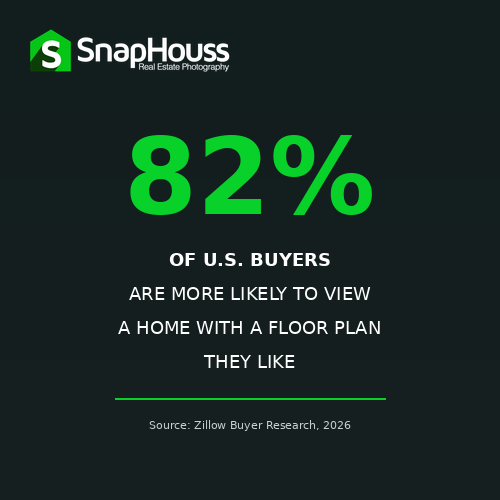
A floor plan is one of the most useful ways to make a winter listing easier to understand. Zillow’s 2026 Consumer Housing Trends Report says 82% of surveyed U.S. buyers agreed they were more likely to view a home if the listing included a floor plan they liked. This is a measure of stated buyer preference, not evidence that a particular listing will sell faster or for a higher price. Nevertheless, it supports a straightforward marketing decision: combine attractive photos with clear information about room arrangement. For multi-level homes, townhouses and properties with finished basements, a floor plan can help viewers connect the spaces shown in the gallery before committing to an in-person showing.
Add a 3D tour when layout and distance are important
A 3D virtual tour gives buyers another way to explore room connections and movement through the property. It is particularly useful for relocations, out-of-town prospects, larger homes and listings with unusual layouts. The tour should accurately represent the current condition of the home and work alongside the still photographs rather than replace them. An agent marketing a suburban detached home might pair a bright exterior and a concise photo gallery with a measured floor plan and an immersive walkthrough. For a downtown condo, the package may emphasize interior circulation, window views and building amenities. The best media combination depends on the property and the questions its likely audience will have.
What about aerial photographs and snowy surroundings?
Aerial photography can add useful context for homes on larger lots, properties near parks or waterfronts, and residences with meaningful separation from neighboring buildings. In winter, however, snow cover may make boundaries and terrain less apparent. Agents should ensure aerial imagery does not imply a property line or feature that has not been verified. Drone flights also depend on weather, airspace rules and safe operating conditions. For properties where aerial imagery adds little information, a professional floor plan or more complete interior coverage may deliver greater marketing value. Choosing media selectively is better than ordering every available format without a clear reason.
How to handle seasonal accuracy and older exterior photographs
Agents sometimes have access to exterior photographs captured during spring or summer. These can provide context about landscaping or outdoor living areas, but they should not be used in a way that misleads viewers about the property’s current condition. If an older seasonal image is included, label it clearly and confirm that it still accurately represents the property. Similarly, avoid editing snow away, inventing greenery or changing permanent features without appropriate disclosure and platform compliance. Buyers should be able to distinguish the home’s actual characteristics from seasonal context and any illustrative enhancements. This protects credibility and reduces avoidable surprises at showings.
A practical winter package for agents and brokerages
For a typical detached home, the foundation is professional HDR or blended interior and exterior photography with a logical gallery order. A measured floor plan provides spatial orientation; a 3D tour adds immersive context when appropriate. Twilight exteriors can be a premium addition for homes whose architecture or lighting genuinely benefits from the evening setting. For condos, townhouses and rental properties, prioritize clear room coverage, usable layouts, views and any amenities that can be photographed accurately. Agents working across several neighborhoods can standardize their baseline package while adapting optional media to the property. This creates consistency for the brokerage without forcing every listing into an identical presentation.
Timing, coordination and launch readiness
Winter photography scheduling benefits from flexibility. Snowstorms, icy access and low visibility may affect outdoor coverage, while early sunset can compress the shooting window. Coordinate property access, safe walkways and lighting readiness before the appointment. If a listing is scheduled to launch on a particular day, allow time for image review, property facts verification and platform-specific requirements. Confirm whether the property website, 3D tour or other hosted media has ongoing fees or cancellation terms before placing an order. A predictable workflow helps agents avoid rushed launches, incomplete galleries and avoidable misunderstandings with sellers. The aim is a finished marketing presentation, not simply a folder of images.
What the research does—and does not—prove
Research supports investing in informative listing media, but agents should avoid promising a guaranteed sale outcome. Zillow’s 2025 research on prospective buyers found that 33% ranked floor plans as their most important listing feature, while 26% chose high-resolution photos and 20% chose 3D or virtual tours. Those figures describe preferences among surveyed prospective U.S. buyers, not conversion rates. The National Association of REALTORS’ 2025 staging report also found that 83% of buyers’ agents said staging made it easier for buyers to visualize a property as a future home. Together, these findings reinforce the value of clarity and presentation; they do not establish that any one media service will raise a home’s sale price by a fixed percentage.
Book professional winter real estate photography with SnapHouss
Whether you are launching a family home in Ontario, a suburban listing in the U.S. Midwest or a condominium in a Canadian city, the right media package should make the home understandable and appealing in its actual season. SnapHouss provides professional real estate photography and complementary listing media, including floor plans and 3D virtual tours, through its service network. Review the available options for your market, choose the coverage appropriate for your property and confirm pricing and hosting terms before booking. Visit snaphouss.com to arrange professional listing media and prepare your next winter listing for a confident online debut.
