
Selecting a real estate photography package is not simply a search for the longest list of deliverables at the lowest advertised price. A compact condo, a rural acreage property and a new construction model home may all need professional photos, but the supporting media and scheduling requirements can be very different. For listings planned in 2027, agents should compare packages by the information they will communicate to buyers and sellers, the channels where the media will appear and the full terms of the service.
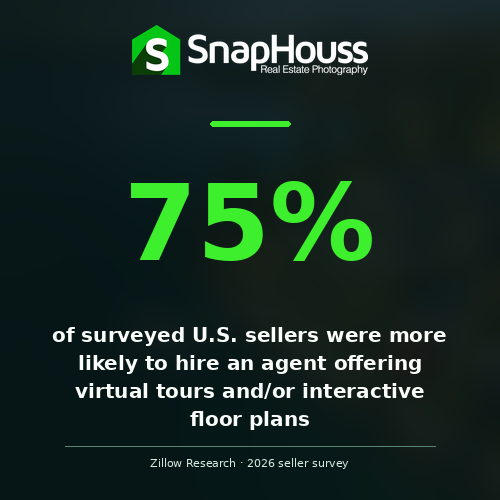
Zillow's 2026 seller research found that 75% of surveyed U.S. sellers said they were more likely to hire an agent who offered virtual tours and/or interactive floor plans. That is a preference about a prospective agent's services, not a promise of sale results. It nevertheless suggests that thoughtful media options can be part of a compelling listing presentation.
Start with a dependable photography foundation
High-quality listing photos remain useful for almost every residential property. A basic plan should cover the exterior, entrance, main living spaces, kitchen, bedrooms, bathrooms and important outdoor features. Ask how the provider determines photo count, whether the quote scales with property size and when edited images are delivered. Photographs should be clear and consistent, with balanced light and straight architectural lines. Expensive add-ons cannot compensate for missing photographs of the rooms buyers need to evaluate.
When a floor plan deserves priority
A floor plan explains room adjacency and circulation in a way a photo gallery cannot. In Zillow's 2026 buyer survey, 82% said they were more likely to view a home with a floor plan they liked. The result is a stated preference, not a guaranteed showing increase. Consider a floor plan for condos with unusual layouts, homes with multiple levels and properties where a buyer might otherwise struggle to understand how rooms connect. Ask which measurement standard the provider uses and ensure advertised area complies with local requirements.
Decide whether 3D tours help your audience
A 3D tour can support remote viewing, relocation searches and detailed pre-showing research. It is most useful when the camera coverage and interface make it easy to move between actual rooms. Before ordering, confirm whether tour capture, processing, publication and hosting are all included, and whether the property website will link to the tour. A service may provide an attractive launch experience but carry ongoing hosting costs. Ask how cancellation works and what happens to links if a subscription ends.
Reserve aerial photography for context
Drone images can show acreage, outdoor amenities, building relationships or access routes that ground-level photos do not explain. They are less useful when the property has no setting that needs this perspective. Weather, airspace rules and site conditions affect availability. Compare a package with aerial stills against one with aerial video, and ask what the deliverables will actually show. If lot lines or location labels are requested, supply verified references and label any approximate boundary graphics clearly. Dramatic scenery should never obscure which parcel is for sale.
Choose video for the marketing channels you use
A horizontal property tour may fit a listing website, while a vertical Reel is generally designed for social distribution. Neither format should be added solely because it appears on a package menu. Discuss the desired audience, video duration, on-camera agent involvement, narration and whether drone footage is part of the edit. Confirm deadlines, revision policy and platform compatibility. If the agent is planning paid social promotion, decide ahead of time which clips and aspect ratios need to be delivered. A coordinated shot list helps avoid unnecessary reshoots.
Use virtual staging selectively and transparently
Vacant homes sometimes benefit from digitally placed furnishings that help viewers imagine use of a room. Price staging by the number of rooms or images actually needing help, not by assuming every photograph should be altered. Keep original property photos available and label staged results under local rules. Ontario's real estate regulator instructs agents to verify AI-created listing details and clearly identify digitally altered images. The permanent features, floor area and views should remain accurate. Effective virtual staging is a complement to photography, not a substitute for disclosure.
Compare real published package inclusions
SnapHouss advertises professional photo, video, floor-plan and 3D-tour services with packages and custom bundle options. Its pricing page also lists add-ons such as virtual staging, aerial media and vertical social video, with availability varying by region. Review the final booking amount rather than quoting a bare starting price as the cost for every home. Published prices can be affected by applicable taxes, processing fees, service-area adjustments and property-specific requirements. Request confirmation of included editing, turnaround and revisions before booking.
Read the hosting and cancellation terms
Hosted media can have a useful life beyond the original photo delivery, but it also creates an ongoing commitment. SnapHouss's published pricing currently describes a 30-day initial free hosting period for certain 3D tours, property websites and virtual feature sheets, followed by $10.99 per month plus applicable taxes and fees unless canceled. Hosted services are grouped in that arrangement, and cancellation may deactivate associated pages or tours. Explain these terms to the seller or payer before the listing launches and track them when the property closes.
Match each common listing type to a focused scope
For a straightforward condo, a high-quality photo set and floor plan may answer most buyers' questions. A single-family suburban home might add video or a 3D tour when its layout and marketing channels justify them. An acreage or waterfront listing may make stronger use of aerial context, while a vacant home might benefit from a few labeled virtual staging images. For a new-construction model, a comprehensive set that documents finishes, layout and amenities may be useful across several campaigns. The best choice is property-specific, not one-size-fits-all.
Frequently asked questions
What is included in a typical real estate photography package?
It depends on the provider and region. Confirm photo coverage, floor plans, video, tours, turnaround, taxes and any size or travel adjustments.
Are 3D tours always necessary?
No. Consider layout complexity, relocation interest, seller expectations, budget and hosting requirements.
What fees should I review before booking?
Check the full checkout price, applicable taxes, merchant-processing fees, add-on prices and any recurring hosting charges.
Can better media guarantee more offers?
No. Listing price, condition, local demand and the overall sales strategy remain important. Media helps explain and market the property.
Book professional listing media
For 2027, begin with the listing's real communication needs, choose core photography, then add only those media formats that solve a clear problem for prospective buyers or sellers. SnapHouss offers service options in participating U.S. and Canadian markets. Review current pricing and booking terms at https://snaphouss.com/pricing and https://snaphouss.com/.
