
A newly constructed home may have fresh finishes, a carefully designed floor plan and attractive outdoor spaces, but none of those features communicate themselves in an online listing. Builders, developers and agents need accurate photography that documents the home as it exists, plus appropriate supporting media to explain layout, upgrades and community context. As 2027 marketing plans take shape, it is worth evaluating what should be photographed once, what requires updates as construction advances and which assets are suitable for a finished model or a property still under development.
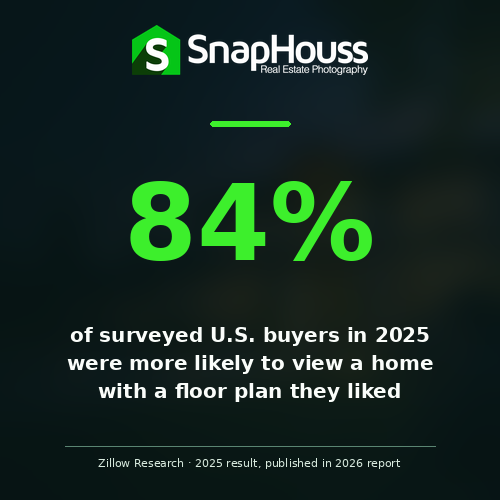
Floor-plan information deserves particular attention. Zillow's 2026 buyer research reports that in its 2025 survey, 84% of U.S. buyers said they were more likely to view a home if its listing included a floor plan they liked. The 2026 figure was 82%. These are buyer attitudes, not measured sales outcomes for a particular builder.
Create a shot list around the finished home
For a completed model, organize professional photographs around what buyers need to understand. Start with the exterior, entrance and circulation into the principal living spaces. Include kitchens, bathrooms, bedrooms, flexible rooms and the relationship between indoor and outdoor areas. Identify distinctive design details—cabinetry, counters, tile, fixtures or built-in storage—without letting a series of detail close-ups replace useful wide room views. The photographer should know which features are standard and which are upgrades so the builder can connect the imagery with accurate product information.
Show the plan, not only beautiful finishes
New-build buyers are often comparing plans and lots before setting foot in the property. An accurately prepared floor plan can demonstrate room adjacency, bedroom placement, garage access and outdoor connections. Pair key photographs with the corresponding spaces so viewers do not have to reconstruct the home mentally. Confirm the appropriate measurement conventions and whether the displayed layout is the exact home, a representative model or an optional configuration. Never imply that a model's optional structural features or upgraded finish package automatically come with every available lot.
Distinguish completed models from homes in progress
Construction marketing sometimes requires photographs of a completed model while individual inventory homes are unfinished. That can be legitimate when the relationship is stated clearly. Label model-home imagery and representative finishes as illustrative whenever they do not depict the exact property for sale. Do not mix construction-stage images, renderings and finished-property photographs without explanation. The brokerage and builder should agree on the words used in captions and identify which components vary by plan, home site or purchase agreement. Buyers should know what they are actually seeing.
Consider 3D tours for remote and repeat buyers
An immersive tour lets buyers inspect a model's circulation and interior relationships at their own pace. That can help relocation buyers narrow options before traveling and allow local shoppers to revisit a plan after a model-home visit. Assess how many areas need to be captured and how the tour will be linked to the listing page. Confirm mobile compatibility, processing time and hosted-media terms. A 3D tour should present the same home or an accurately labeled model; it must not silently combine different floor plans into a single apparent property.
Use aerial images to explain site context
Aerial photographs can show neighborhood streets, nearby building phases, lots and the relationship between a model home and shared amenities. However, development sites change quickly. A current image may become outdated when roads open, landscaping is installed or additional buildings are completed. Schedule aerial work for a stage that communicates useful facts and update it when material conditions change. Commercial drone operations must also comply with applicable aviation rules and airspace restrictions, and the provider may not be able to guarantee a particular angle.
Plan still photographs and video together
Photography is useful for detailed inspection, while video can connect spaces and emphasize the experience of moving through a completed home. Decide whether the builder needs a horizontal overview for property pages, short vertical edits for social campaigns, or an on-camera walkthrough with an agent or representative. Coordinate the shot list so key features appear in appropriate formats without inconsistent styling. If the development markets several different models, create a clear file-naming and distribution system to prevent the wrong floor-plan media from being used on another listing.
Photograph finishes and amenities honestly
A model home may showcase premium fixtures, elaborate landscape features or optional appliances. Photography can document these without implying that every buyer receives them. Coordinate captions with the published specification sheet, including upgrade availability and the configuration shown. Shared pools, trails and clubhouses should be labeled as community amenities with eligibility and completion status independently verified. Neither a beautiful photograph nor a rendering establishes access rights or included features. Clear distinctions protect the project's credibility during the buying process.
Schedule media around completion and punch-list work
Professional photography should usually occur after final cleaning and visible finishing work, not while construction materials and ladders still occupy key rooms. Check window coverings, light fixtures, appliance installation, exterior landscaping and staged furniture before the appointment. If the home is not ready, consider staged capture milestones with honest descriptions rather than rushing a purported finished-home gallery. Builders benefit from coordinating site access, safety procedures and media releases with the photography provider. A prepared shoot reduces delays and helps maintain a consistent visual library.
Build a repeatable marketing library for future phases
A developer may need the same model-home assets for an active listing, a brochure, social posts, property website and sales presentation. Establish usage rights, deliverable formats and an organized archive before the first shoot. Keep original photos, edited images, plans, videos and tour links assigned to the correct model and phase. When site conditions or specifications change, record which assets require replacement. SnapHouss offers combinations of photography, floor plans, tours and video in participating markets; builders can confirm service scope and delivery requirements when planning a multi-property project.
Frequently asked questions
Can model-home photos represent another inventory unit?
Only with truthful labeling and compliance with applicable rules. Explain which photos are representative and verify included finishes and plan options.
Why include floor plans in new construction marketing?
They help buyers evaluate room configuration and compare options. Zillow’s 2025 survey reported strong stated interest in plans.
Do builders need drone photography for every phase?
No. Use aerial imagery when it helps explain the site or development context, subject to current site and aviation conditions.
What is the difference between a rendering and a photograph?
A rendering depicts a proposed or illustrative scene; a photograph records an actual scene. Clearly distinguish them in marketing.
Book professional listing media
A successful new-construction media plan does more than showcase polished interiors. It documents the completed home, clarifies the plan, explains the relevant site and provides coordinated assets for every marketing channel. Builders and agents can explore SnapHouss photography and supporting services at https://snaphouss.com/ and review current package terms at https://snaphouss.com/pricing.
