
A Bella Vista listing can offer more than attractive rooms. A view through the living room window, a deck surrounded by trees, or the relationship between a home and its outdoor spaces may be central to its appeal. Real estate photography in Bella Vista should help buyers understand those connections. A gallery that shows only interiors may leave an important part of the story unexplained, while photographs of scenery alone may fail to show how the home actually lives.
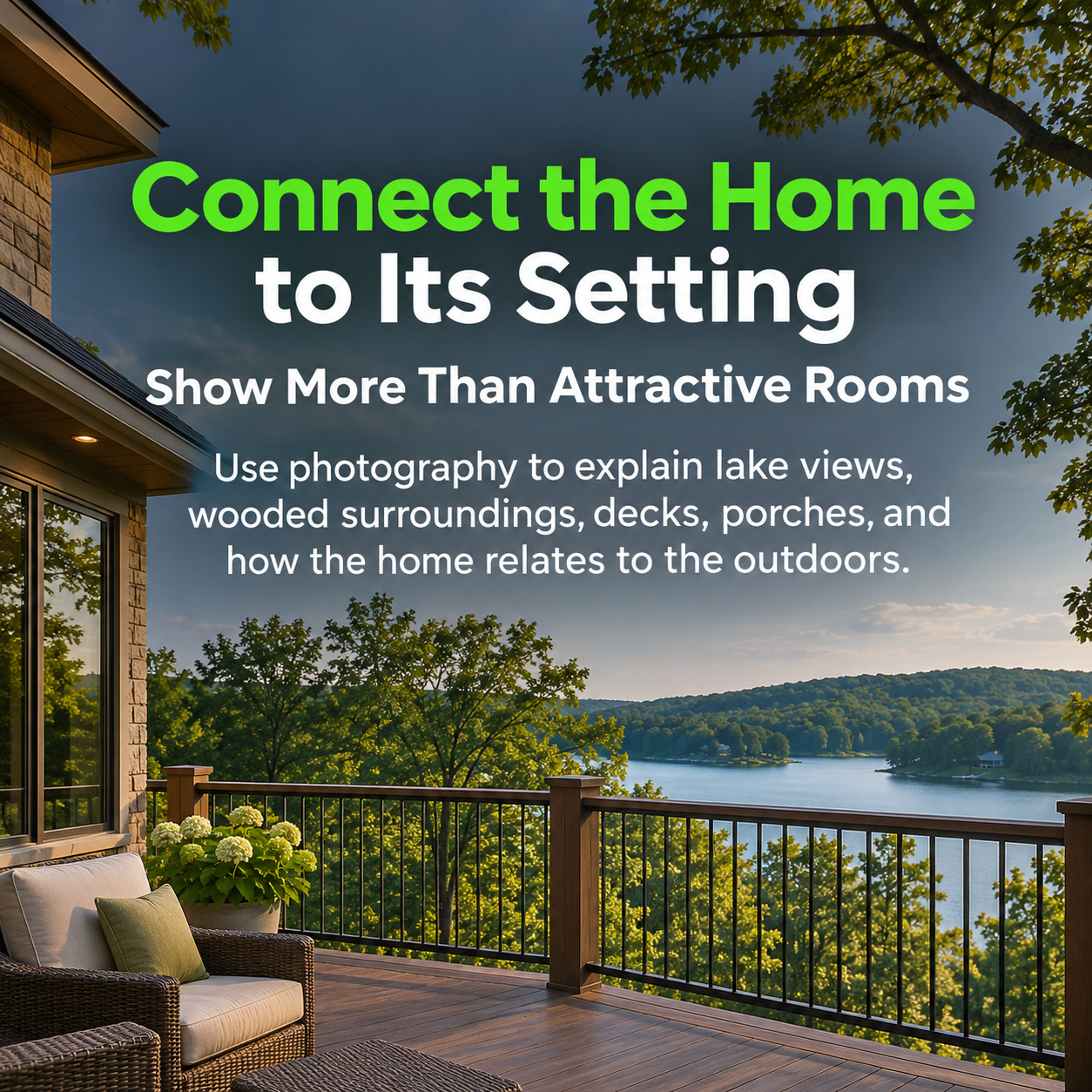
The opportunity is to connect the property with its setting in a useful, accurate way. A lakefront home, a golf course property, and a wooded retreat each require a different approach. Even two neighboring homes can have very different views, layouts, and outdoor features. At SnapHouss, we work with Realtors to identify the details that distinguish the listing, then consider how photography and other booked media can explain those details to prospective buyers exploring Northwest Arkansas homes.
Begin with the property’s defining feature
Before the appointment, ask what a buyer would notice first during an in person visit. It might be the view from the main living area, an inviting covered porch, a bright sunroom, or the privacy around a backyard seating space. Start with a feature that belongs to the actual property. This gives the photography plan a clear focus and helps the Realtor describe why particular images matter instead of relying on broad statements about the surrounding community.
Write down a few priorities and share them with the photographer. Include where the feature is best understood: inside the living room, from the lower deck, along the driveway, or from an appropriate aerial perspective. Mention access instructions and any areas that need special coordination. A concise property briefing is more useful than asking for a vague lifestyle look. It helps the team connect the visual approach to the home’s real strengths while remaining flexible about light and conditions.
Show how rooms connect to the outdoors
A room with a view needs more than a photograph pointed through the glass. Buyers also need to understand the room itself: its layout, the position of windows and doors, and the space available for furniture. A thoughtful interior photograph can establish that relationship. Additional exterior images can then show the porch, deck, or landscape beyond the room. Together, the photographs explain how the indoor and outdoor spaces connect rather than presenting them as unrelated features.
Prepare these transitions carefully. Clear furniture away from important doorways, clean accessible window glass, and tidy the area immediately outside. Put away hoses, toys, and temporary storage visible through windows. A well prepared deck can strengthen an interior image because the view beyond the glass supports the room’s purpose. Discuss window treatments with the team and follow the SnapHouss preparation checklist. Simple preparation helps the photographer concentrate on the relationship between the home and its surroundings.
Photograph lake views with accurate context
For a property with a lake view, show where that view can actually be enjoyed. The experience from the kitchen may differ from the view on the upper deck or at the edge of the yard. Use photographs that make those vantage points understandable. A close view of water can be attractive, but it should not leave buyers guessing whether the scene was photographed from the home, a shared amenity area, or another location away from the listing.
Keep descriptions aligned with the property information supplied by the Realtor. Lake frontage, a lake view, and proximity to a lake describe different things. A photograph does not establish ownership, access rights, or permission to use a particular dock. Avoid language that blurs those distinctions. Accurate context can still be compelling: showing a pleasant view from a real living space is useful information. Buyers benefit when the image and caption explain what is being offered without requiring them to make assumptions.
Explain golf course settings visually
A home near a golf course may have a distinctive outlook from its patio, windows, or yard. Capture that relationship from appropriate locations associated with the property. An image showing the house and its outdoor seating area can be more informative than a distant landscape alone. Buyers should be able to understand how the setting relates to everyday use of the home, including the areas where they might relax, entertain, or spend time outside.
Keep amenity claims separate from visual presentation. A golf course appearing nearby does not by itself establish membership, included privileges, or unrestricted access. Those details belong in verified listing information. The photographer’s role is to show the visible setting, and the Realtor can explain the relevant arrangements accurately. This approach keeps the imagery useful without overstating the offering. It also encourages more specific storytelling: describe the actual patio, room, or view instead of assuming every buyer will interpret the setting the same way.
Give wooded properties a clear visual structure
Trees can provide a beautiful backdrop, but a heavily wooded photograph can make the home difficult to identify. Balance the atmosphere of the setting with clear views of the structure, entrance, and usable outdoor areas. Ground level images can introduce the home and its architectural features, while carefully selected wider views can explain the surrounding trees. The objective is to show the property within its environment without allowing the landscape to obscure the subject entirely.
Preparation can improve that clarity. Clear fallen branches and loose items from walking areas, tidy seating spaces, and make the entry easy to recognize. Discuss any driveway or access issues before the shoot. If a wooded lot is being marketed, provide accurate references for any requested boundary illustration. Tree cover can conceal the ground and other features, so the media should not suggest information that cannot actually be seen or verified. A clear, honest presentation helps buyers decide what to explore next.
Treat decks, porches, and sunrooms as living spaces
Outdoor and transitional spaces deserve more than a quick photograph at the end of the appointment. A deck may connect directly to the dining area, a covered porch may frame the entrance, or a sunroom may provide a useful additional gathering space. Show how each area functions and where it sits within the home. This helps prospective buyers understand the layout and imagine how the property could fit their routines without making promises about a particular lifestyle.
Prepare these spaces with the same care as a living room. Straighten furniture, remove clutter, wipe surfaces, and put away cleaning tools. Avoid overfilling a small porch with accessories that make it difficult to see the available space. If the home is professionally staged, coordinate with the stager before changing the arrangement. The goal is an inviting, understandable room or outdoor area. Clean sightlines between the interior and exterior can make the entire listing gallery feel more connected.
Consider aerial imagery when it adds information
Aerial photography may help explain a Bella Vista property’s position within its surroundings. It can show how the home sits on the lot, the arrangement of outdoor spaces, or a broader view that is difficult to capture from ground level. Start with the question the image needs to answer. If a closer exterior photograph already explains the feature clearly, an additional wide aerial should contribute something distinct rather than simply repeating the same information.
Drone work depends on weather, airspace restrictions, and site conditions, so discuss the request ahead of time. Trees and surrounding activity can affect the available views. When location pins or labels are useful, keep them restrained and verify their names and placement. Any lot outline should be identified as approximate rather than presented as a survey. Accurate supporting graphics can help orient viewers, but the underlying photography should still show enough context for the property to remain easy to recognize.
Build a gallery that follows the buyer’s questions
A useful gallery introduces the property, explains its living spaces, and then develops the details that make it distinctive. The best opening photograph depends on the listing. A strong front exterior may establish the home clearly, while another property may need an early image highlighting its most important setting. Work with the Realtor to choose a sequence that answers practical questions about the home instead of placing every dramatic landscape photograph before the residence has been introduced.
Think in connected groups of images. Show the living room, the door to the deck, and the outdoor view as a short visual sequence. Pair an aerial context image with a closer exterior so buyers can locate the home within the wider scene. Include useful secondary spaces when they are part of the booked scope. Remove unnecessary repetition. A coherent gallery helps viewers retain the relationships between rooms, outdoor areas, and setting as they move through the listing.
Plan preparation and media for the intended channels
The same property may appear in a listing gallery, on a property website, and in social posts. These uses can call for different image selections. A Realtor discussing a wooded setting on LinkedIn might choose a small group of explanatory photos. An Instagram post might highlight a transition from the interior to a deck. Tell the team how the media will be used before the appointment so framing and the final selection can support those purposes where possible.
Preparation should cover the full visual story. Complete the interior checklist, then walk the driveway, entrances, porches, and other areas that will be included. Remove pet belongings, clear counters, make beds, and check lighting. Confirm the media package and any special requests rather than assuming every space or service is included. If views or outdoor features are central to the listing, communicate that priority early. Coordination between the seller, Realtor, and photographer makes the appointment more focused and helps avoid overlooked details.
Present the home and its setting as one story
Bella Vista real estate photography is most useful when it explains both the home and the features around it. A beautiful view becomes more meaningful when buyers understand where they can experience it. A wooded yard becomes easier to appreciate when the entrance, deck, and living spaces remain clear. Thoughtful photography does not need to exaggerate amenities or make guarantees about results. It gives Realtors a more complete set of visual information for representing the actual property.
SnapHouss serves Bella Vista and communities throughout Benton and Washington counties with real estate photography and other booked media services. If your next listing has a lake view, a golf course setting, a wooded backdrop, or a distinctive outdoor living area, tell us what makes it special before the shoot. We will help plan a clear visual presentation around the property’s real features and the services selected. Book your next shoot at https://snaphouss.com/ and let’s show the setting as thoughtfully as the home.
