
A modern smartphone can take an impressive picture. That does not automatically make it the right tool for marketing one of a seller's largest assets. For real estate agents in the United States and Canada, listing photography serves two audiences at once: buyers evaluating a property and homeowners evaluating the agent's marketing approach. Professional real estate photography is not simply about owning a more expensive camera. It is about producing a consistent, accurate, compelling presentation that works across listing portals, social media, brochures and property websites.
The question for agents is not whether a smartphone can capture a room. It is whether the finished listing media communicates the property's space, light and distinctive features—and supports the service promised to the seller.
What the latest seller research says
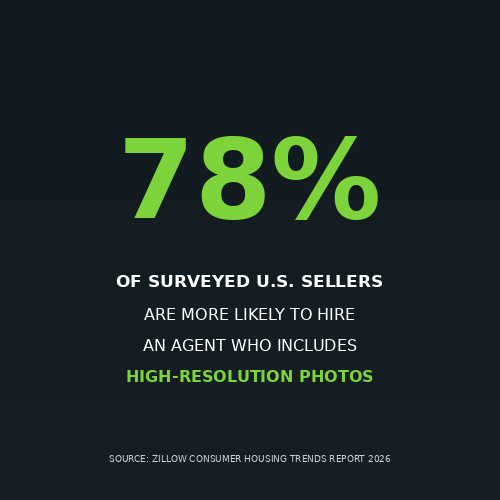
Zillow's 2026 Consumer Housing Trends Report offers a useful reason to take listing media seriously: 78% of surveyed U.S. sellers said they were more likely to hire an agent who included high-resolution photography in their services. In the same report, 75% said they were more likely to hire an agent who included virtual tours and/or interactive floor plans. These are stated preferences, not proof that a particular photography package causes a home to sell faster or for more money.
The National Association of REALTORS®' 2025 Profile of Home Buyers and Sellers provides another perspective: among buyers who used the internet in their home search, 81% found photos very useful, compared with 57% for floor plans and 38% for virtual tours. Buyers use listing imagery to decide which properties deserve closer attention. That makes image quality an important part of the online experience, even though price, location, condition and market conditions ultimately influence transactions.
For agents, these findings point to a practical opportunity. A professional media package can be a tangible part of the listing presentation: something a seller can see and evaluate before choosing who will represent their property.
Professional photography versus smartphone photography
Professional photographers bring specialized equipment, experience and a repeatable process.
1. Rooms that look natural, not distorted
Residential interiors pose a particular challenge. Small bathrooms, narrow hallways and open-concept living spaces need thoughtful composition. A phone's ultra-wide setting can make a room appear larger than it feels in person, especially when edges stretch or vertical lines lean. Professional photographers choose viewpoints and focal lengths deliberately, aiming to communicate the layout without misleading prospective buyers.
2. Balanced interiors and window views
A bright window beside a darker living room can overwhelm a single exposure. Professional real estate photographers use appropriate lighting and exposure techniques to retain detail across the scene. The goal is not to create an impossible-looking interior. It is to show the room, its finishes and the natural light in a way that resembles what visitors will experience.
3. Consistency across the full listing
One attractive image is not a complete property presentation. A strong gallery needs coherent brightness, color, composition and sequencing—from the exterior hero shot through principal living spaces, bedrooms, amenities and outdoor areas. Professional production creates a more consistent visual story, particularly for agents handling several listings at once.
4. A planned property shoot
Professional photographers arrive with a clear objective: capture the property for marketing. They assess which spaces need attention, how sunlight changes through the day, which architectural features matter and which angles help viewers understand circulation. Twilight photography may be appropriate for properties with notable exterior lighting, while daylight images often provide clearer context for many other homes.
5. Media designed for multiple channels
An MLS gallery is only one destination. Listing photos may also support agent websites, social posts, digital advertising, property brochures and presentations to prospective sellers. A coordinated photography service can help agents maintain a recognizable visual standard across these channels, subject to each platform's image and branding requirements.
Is professional photography worth the cost?
There is no universal return-on-investment figure that applies to every listing. Photography prices vary by city, property size, number of images, travel, turnaround time and requested add-ons. Different properties have different production needs.
Rather than comparing only the cost of the camera or the number of photographs, agents should evaluate what the service includes: preparation guidance, scheduling reliability, editing consistency, delivery format, usage rights and the ability to add related media. Time matters, too. An agent’s time is better spent serving clients.
A professional shoot can also become part of an agent's value proposition during a listing appointment. Showing sellers a consistent portfolio of professionally presented properties is more persuasive than promising to “take some good pictures” after the paperwork is signed.
Beyond photography: what about floor plans and virtual tours?
High-resolution images remain essential, but they do not answer every question buyers have. Photos show finishes; floor plans explain connections; video and 3D tours help shoppers explore.
Zillow's 2026 buyer research reports that 82% of surveyed U.S. buyers said they were more likely to view a home if its listing included a floor plan they liked. This does not mean a floor plan guarantees a showing. It does suggest that buyers value tools that help them judge whether a home fits their needs before visiting.
For agents, the best combination depends on the property and marketing objective. Choose media that matches the property. The key is a cohesive presentation rather than purchasing add-ons without a purpose.
What agents in the U.S. and Canada should consider
Real estate markets differ, but the underlying listing challenge is familiar. In Toronto, Vancouver, Calgary, Houston, Phoenix or Orlando, agents compete for sellers' trust and buyers' attention. Professional media can help establish a consistent marketing standard, while local demand, brokerage expectations, MLS requirements and property characteristics shape the final package.
For Canadian listings, agents should ensure photography accurately represents permanent property features and follows applicable provincial and board advertising rules. U.S. agents should likewise confirm their MLS's image specifications and rules for altered or virtually staged media. Accuracy matters regardless of who captures the photographs.
The right question is not whether every listing needs the most elaborate media package. It is whether the presentation reflects the home, the intended audience and the level of service the agent wants associated with their brand.
Questions realtors should ask before booking a photographer
What is included in the package? Confirm the approximate image count, editing, turnaround and delivery formats, along with any separate charges for travel or specialty services.
Does the photographer understand real estate marketing? Look for a portfolio with natural-looking interiors and accurate verticals.
Can the service scale with my listings? A dependable provider should make it straightforward to order repeat shoots and coordinate additional media when needed.
What happens after delivery? Clarify revisions, licensing, property website options and the intended use of images across your marketing channels.
Does the media match my brand? Consistency across listings helps create a recognizable standard. It also gives prospective sellers a clearer picture of what they can expect when hiring you.
Frequently asked questions
Can an iPhone take real estate listing photos?
Yes. Modern smartphones can capture usable property photos, particularly in favorable lighting. But the result depends on the operator, composition, lighting, editing and the demands of the property. A professional service offers specialized expertise and a repeatable production process, not simply a different device.
Does professional real estate photography help sell homes faster?
It may improve how a listing is presented and how buyers evaluate it online, but there is no guaranteed reduction in days on market. Price, location, condition, inventory and demand also influence the outcome. Agents should be cautious of universal claims about faster sales or higher prices.
Should every listing include professional photography?
For agents who want consistent, high-quality marketing, professional photography is a sensible baseline to consider. The number of images and any add-ons should be matched to the property, local market and budget.
Make every listing reflect your standard
The real comparison is not professional cameras versus smartphone cameras. It is a carefully planned listing-media experience versus an improvised one. Sellers want confidence that their home will be presented thoughtfully, and buyers need useful, accurate visuals to decide what to explore next.
SnapHouss helps real estate professionals create polished listing presentations through professional photography and complementary real estate media services. Explore our work, review available services and book your next property shoot through SnapHouss. Give your next listing the visual presentation—and your sellers the professional experience—they deserve.
Research note: U.S. survey findings describe surveyed respondents and should not be generalized as measured outcomes for every property or for Canadian sellers.
Sources
Zillow Research, Sellers: Consumer Housing Trends Report 2026: https://www.zillow.com/research/sellers-consumer-housing-trends-report-2026/
Zillow Research, Buyers: Consumer Housing Trends Report 2026: https://www.zillow.com/research/buyers-housing-trends-report-2026/
National Association of REALTORS®, 2025 Profile of Home Buyers and Sellers: https://cdaronline.org/wp-content/uploads/2025/11/NAR2025ProfileHomeBuyersSellers.pdf
National Association of REALTORS®, 2025 Profile of Home Staging: https://www.nar.realtor/research-and-statistics/research-reports/profile-of-home-staging
